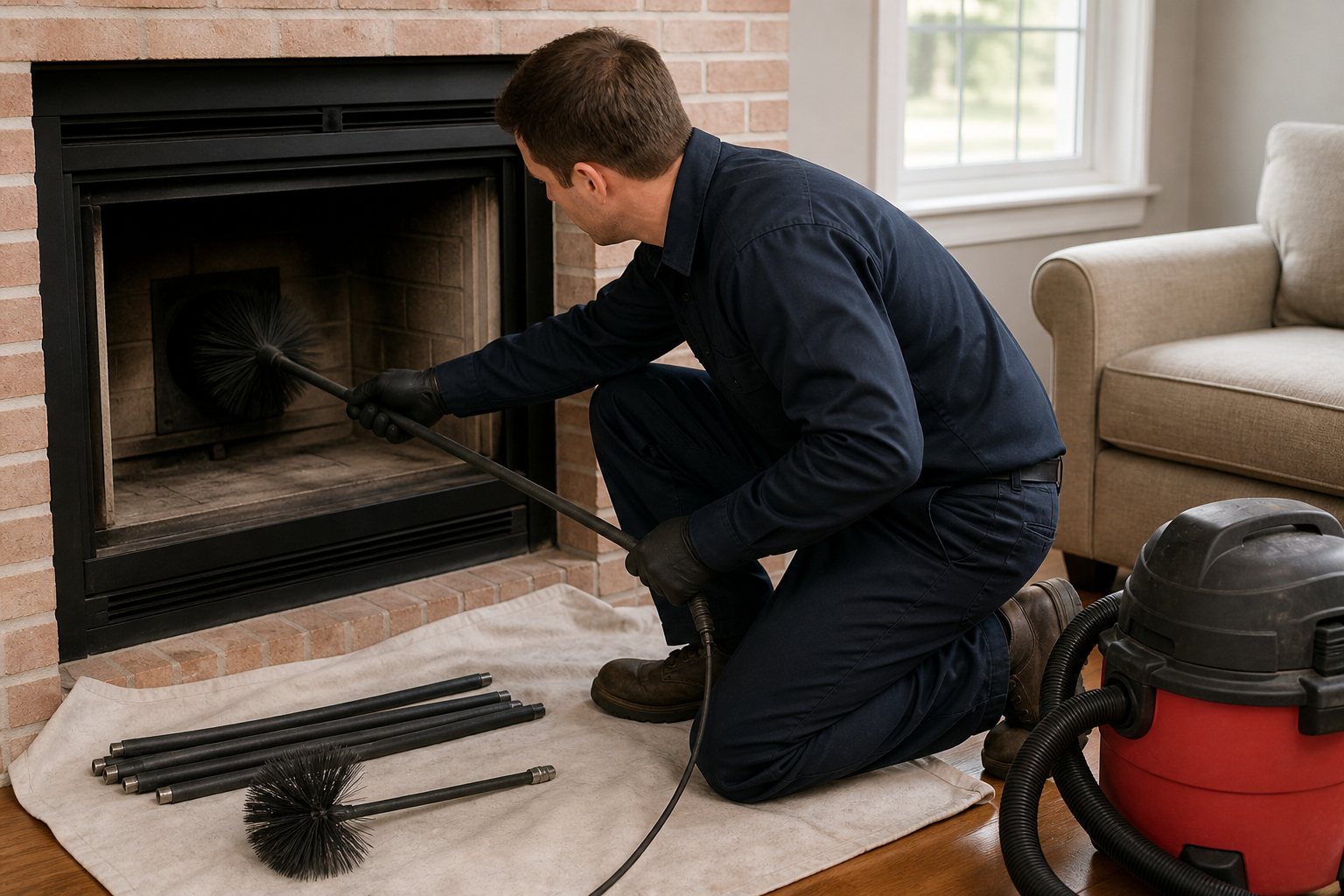
If you use a fireplace or wood-burning appliance, chimney maintenance should be part of your regular home-care routine. The right cleaning schedule depends on how often the system is used, the type of fuel burned, and what an inspection reveals.
Why chimney cleaning matters
Wood fires can leave soot and creosote inside the flue. Creosote is combustible, and heavier buildup may increase the risk of a chimney fire. Debris, nesting material, damaged components, and restricted airflow can also affect how safely the system vents.
Signs it may be time to call a professional
- You cannot remember the last cleaning or inspection.
- The fireplace has been used regularly through the colder months.
- You notice strong smoky or tar-like odors.
- Smoke enters the room instead of drafting upward.
- Soot or dark debris falls into the firebox.
- You recently bought the home and do not know the chimney’s history.
Dayton’s seasonal timing
Many homeowners wait until the first cold evening to think about the fireplace. Scheduling during spring, summer, or early fall can provide more time to address cleaning or repairs before peak heating season.
Cleaning and inspection are not the same thing
Cleaning removes buildup and obstructions. An inspection evaluates accessible parts of the chimney and may identify concerns involving masonry, liners, caps, flashing, or other components. A professional can explain which service is appropriate for the system and how it is used.
Find chimney help in the Dayton area
Need chimney cleaning or an inspection? Tell Dayton Chimney Connect what you need, and your request may be shared with a local chimney service professional who can contact you about the next steps.